Vermeer’s Hidden Secret: The Truth Behind His Paintings
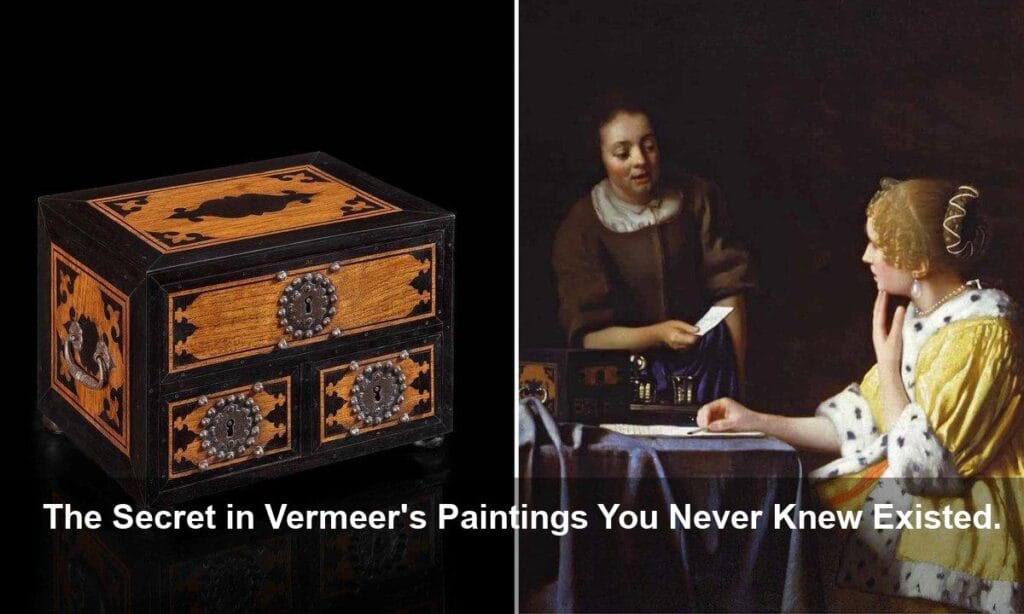
- A rare, expensive Indo-Portuguese jewelry box has been identified in two of Johannes Vermeer’s paintings.
- The discovery, detailed in a new book, suggests the box was a loan from a wealthy and powerful patron.
- This finding challenges the image of Vermeer as an isolated artist, revealing his deep connections with the elite society of his time.
- The presence of such a luxurious item provides new insights into the painter’s methods and the stories behind his subjects.
The Secret Object Hiding in Plain Sight
For centuries, the quiet, domestic scenes of Johannes Vermeer have captivated the world. Yet, a stunning new discovery has revealed a hidden clue that could redefine our understanding of the Dutch master. A new book on the artist’s work has identified a specific, exceptionally rare object in two of his paintings: an expensive Indo-Portuguese jewelry casket. This wasn’t just any prop; its existence points to the artist’s previously underestimated connections to a world of wealth and power.
An Object of Unaffordable Luxury
The item in question is an intricate mother-of-pearl and tortoiseshell casket, a luxury good produced in the Indo-Portuguese colonies during the 17th century. These boxes were highly prized symbols of status and wealth, far beyond the financial reach of an artist like Vermeer. According to the new publication, the appearance of the exact same rare casket in two different works strongly implies it was not owned by the artist but was instead a loan.
The Patron Connection
The book’s authors argue that the box likely belonged to a wealthy patron, who may have lent it to Vermeer for his paintings. This act of trust sheds new light on the painter’s social standing. Rather than being a reclusive figure, Vermeer was likely well-regarded and moved within elite circles in Delft. The inclusion of such a prized personal possession in his art suggests a close relationship between the artist and his financial backers. It transforms the paintings from simple genre scenes into portraits of a patron’s world, documented by a trusted artist.
Rewriting Art History
This revelation challenges long-held beliefs about Vermeer’s life and work. The presence of the casket in paintings such as ‘A Lady Writing’ and ‘The Love Letter’ (examples where such items feature) is no longer a simple detail but a significant piece of historical evidence. It confirms that his patrons were not just clients but active participants in his creative process, lending their most treasured possessions to add a layer of authenticity and opulence to his work.
This discovery encourages art lovers and historians to look at Vermeer’s paintings with fresh eyes. Every object may hold a secret, and this particular jewelry box has just unlocked a major one, revealing the hidden social networks that supported one of history’s greatest artists. The quiet rooms Vermeer painted were, it seems, far more connected to the bustling world of global trade and elite society than ever imagined.
Image Referance: https://www.theartnewspaper.com/2025/11/04/rare-jewellery-box-vermeer-paintings-artist-connections-book